


Keyword research is the backbone of SEO. Without the right keywords, even the best content struggles to rank on Google.
The good news? Artificial intelligence tools like ChatGPT can dramatically speed up the keyword discovery process. By using smart ChatGPT keyword research prompts, you can generate long-tail keywords, uncover hidden opportunities, and plan content strategies in minutes.
In this Article, you’ll learn powerful prompts, proven strategies, and practical examples to use ChatGPT for SEO keyword research.
Why Use ChatGPT for Keyword Research?
Traditional keyword research tools can be powerful, but sometimes slow or expensive. ChatGPT helps you brainstorm keyword ideas quickly and build large keyword lists instantly.
Benefits of using ChatGPT for keyword research
- Generate hundreds of keyword ideas instantly
- Discover long-tail keywords quickly
- Find low-competition content ideas
- Create keyword clusters for SEO
- Speed up content planning
While tools like Ahrefs, SEMrush, and Google Keyword Planner provide data, ChatGPT is excellent for brainstorming keyword opportunities.
Best practice: Use ChatGPT for ideas → validate keywords with SEO tools.
Also, explore SEO Content Writing Prompts for Faster Rankings in 2026
What Are Long-Tail Keywords?
Long-tail keywords are specific search phrases containing 3–5 words. Example:
| Short Keyword | Long-Tail Keyword |
| SEO | SEO tips for beginners |
| keyword research | keyword research for bloggers |
| chatgpt prompts | ChatGPT prompts for keyword research |
Why long-tail keywords are powerful
- Lower competition
- Higher ranking chances
- Better search intent
- More targeted traffic
For new websites or blogs, targeting long-tail keywords is one of the fastest ways to rank on Google.
Best ChatGPT Keyword Research Prompts
Below are some of the most effective ChatGPT keyword research prompts.
1. Long-Tail Keyword Generator Prompt
Act as an expert SEO strategist. Generate 50 long-tail keywords related to the topic: “[YOUR TOPIC]”. Requirements: Each keyword must contain 3–6 words Focus on low competition keywords Target informational search intent Suitable for blog articles Return results in a table with: Keyword | Search Intent | Content IdeaBest for: Bloggers and SEO beginners who want to quickly generate long-tail keywords for blog posts.
2. Low Competition Keyword Finder
Act as a professional SEO expert. Generate 30 low-competition keywords related to the topic “[YOUR NICHE]”. Focus on: Long-tail keywords Informational search intent Keywords suitable for new websites Keywords that could rank easily on Google Return results in a table format.Best for: New websites and bloggers trying to rank faster on Google.
3. Blog Topic Generator from Keywords
Act as an SEO content strategist. Using the keyword “[PRIMARY KEYWORD]”, generate 20 SEO-friendly blog post ideas. Requirements: Each title must be optimized for Google search Include long-tail keyword variations Titles should be engaging and clickable Suitable for beginner bloggers Return the results as a numbered list.Best for: Content creators who need SEO blog ideas from a primary keyword.
4. Keyword Clustering Prompt
Act as an advanced SEO specialist. Take the following list of keywords and group them into SEO topic clusters. Requirements: Identify pillar content topics Group related keywords under each pillar Suggest supporting article ideas Ensure the structure helps build topical authority Return the results in this format: Pillar Topic Supporting Keyword 1 Supporting Keyword 2 Supporting Keyword 3Best for: Building topical authority and organizing SEO content strategies.
5. Search Intent Analyzer Prompt
Act as an SEO expert. Analyze the search intent for the keyword “[KEYWORD]”. Determine: Search intent type (informational, commercial, navigational, transactional) What users expect to see Ideal blog article structure Suggested headings (H2 and H3) Return the analysis clearly structured.Best for: Understanding what users actually want when they search on Google.
6. Competitor Keyword Research Prompt
Act as an SEO competitor analysis expert. For the topic “[YOUR TOPIC]”, generate keywords that competitors are likely targeting. Requirements: Focus on high-traffic blog keywords Include long-tail variations Suggest content ideas for each keyword Return the results in a table: Keyword | Search Intent | Article IdeaBest for: Discovering keywords competitors are likely targeting.
Also, explore Smart AI Prompts for Keyword Research & SEO Growth
7. Question Keyword Generator
Act as an SEO keyword researcher. Generate 30 question-based keywords related to “[YOUR TOPIC]”. Examples: how why what where best ways to Focus on keywords people search on Google. Return results in a list format.Best for: Finding question-based keywords that often rank in Google featured snippets.
8. Trending Keyword Finder
Act as an SEO trend analyst. Generate 20 trending keywords related to “[TOPIC]” that could drive organic traffic. Requirements: Focus on emerging trends Include long-tail keywords Suitable for blog content Return results in a table with: Keyword | Why It’s Trending | Blog IdeaBest for: Discovering trending keywords that can drive fast organic traffic.
9. Buyer Intent Keyword Prompt
Act as an affiliate SEO expert. Generate 30 buyer intent keywords related to “[PRODUCT OR NICHE]”. Focus on: comparison keywords review keywords best product keywords buying guide keywords Return results in a table format.Best for: Affiliate marketers and bloggers targeting product-related traffic.
10. Keyword to Content Outline Prompt
Act as a professional SEO content writer. Create a complete SEO blog outline for the keyword “[TARGET KEYWORD]”. Include: SEO title meta description H1 title H2 headings H3 subtopics FAQ questions Ensure the structure is optimized for Google ranking.Best for: Turning keywords into a complete SEO blog structure.
Ultimate Keyword Research Prompt
Act as a world-class SEO strategist. Perform a complete keyword research process for the topic “[TOPIC]”. Generate: 50 long-tail keywords 20 blog post ideas 10 pillar article ideas keyword clusters search intent analysis Ensure the results are optimized for ranking on Google.Best for: Performing a complete AI-powered keyword research workflow.
Explore Our ChatGPT Prompts Category
Step-by-Step Method to Find Keywords with ChatGPT
Here is a simple 4-step workflow.
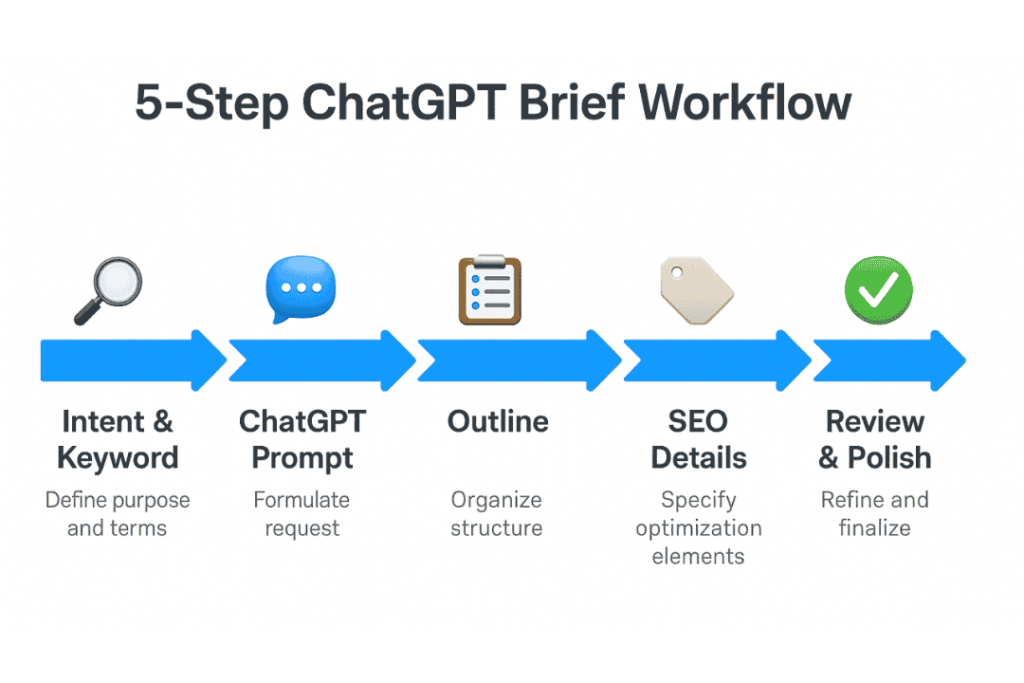
Step 1: Start With a Broad Topic
Example topic: ChatGPT prompts
Step 2: Generate Long-Tail Keywords – Ask ChatGPT to generate:
- 50 keyword ideas
- low competition keywords
- question-based keywords
Step 3: Validate Keywords
- Use tools like: Google Trends, Ubersuggest, Ahrefs
- Check: Search volume, Keyword difficulty, Traffic potential
Step 4: Create Content Clusters – Structure your content like this:
| Pillar Article | Supporting Articles |
| ChatGPT keyword research prompts | ChatGPT prompts for SEO ChatGPT prompts for blog topics ChatGPT prompts for long-tail keywords |
This structure helps Google understand your topical authority.
Tips for Better ChatGPT Keyword Research
Follow these best practices.
Be specific in prompts
- Bad prompt: “Generate keywords about SEO.”
- Better prompt: “Generate 50 low competition long-tail keywords about SEO for beginners.”
Ask for different keyword types
Examples:
- question keywords
- buyer intent keywords
- informational keywords
- comparison keywords
Example Keyword List Generated by ChatGPT
| Keyword | Intent |
| chatgpt keyword research prompts | informational |
| chatgpt prompts for seo | informational |
| best chatgpt prompts for blogging | informational |
| ai prompts for keyword research | informational |
| chatgpt seo content prompts | informational |
These keywords are perfect for building a content cluster strategy.
Common Mistakes to Avoid
Many bloggers misuse ChatGPT for SEO. Avoid these mistakes:
- Publishing keywords without validation
- Ignoring search intent
- Not creating topic clusters
- Writing thin content
- Targeting high competition keywords
Remember: ChatGPT generates ideas — SEO tools validate them.
The Future of AI Keyword Research
AI is transforming how marketers perform SEO research. Tools like:
- ChatGPT
- Surfer SEO
- Frase
Are helping marketers discover keyword opportunities faster than ever. In the future, AI-assisted keyword research will become a standard SEO workflow.
FAQ
What are ChatGPT keyword research prompts?
ChatGPT keyword research prompts are specific instructions given to ChatGPT to generate keyword ideas, long-tail keywords, and SEO topic suggestions.
Can ChatGPT replace keyword research tools?
No. ChatGPT helps generate keyword ideas, but tools like Ahrefs or SEMrush should be used to verify search volume and competition.
How many keywords should a blog post target?
A blog post should focus on one primary keyword and 3–5 related secondary keywords.
Final thoughts
Using ChatGPT keyword research prompts is one of the fastest ways to discover long-tail keywords, generate blog ideas, and build a powerful SEO strategy.
By combining ChatGPT brainstorming with traditional SEO tools, you can uncover low-competition keywords and create content that ranks on Google.
Start experimenting with these prompts, build topic clusters, and publish high-quality content consistently. Over time, this strategy can drive significant organic traffic to your website.
Want more AI SEO prompts? Explore more guides on AI blogging, keyword research, and content strategy to grow your traffic faster.